Europe Aims for Seamless International Train Travel: Deutsche Bahn Reports Progress
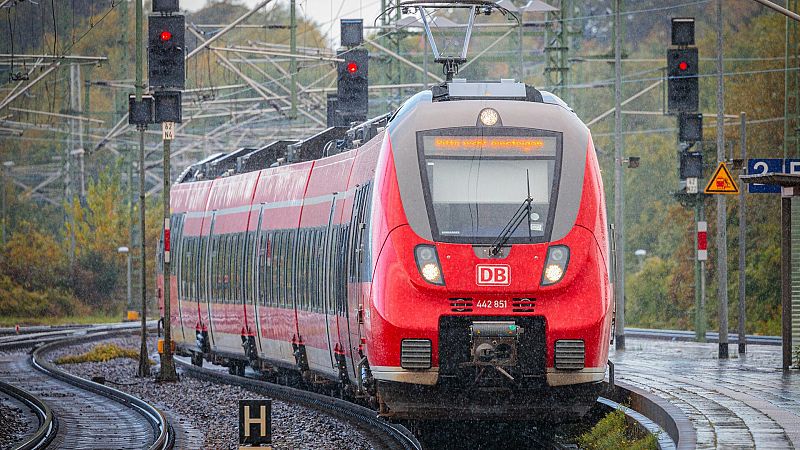
This autumn, Deutsche Bahn (DB), Germany’s national railway company, will begin rolling out a new digital infrastructure that it says will streamline international rail bookings.
This change is part of an eagerly awaited effort to streamline travel across Europe’s collection of individual national railway systems.
“[You will] be able to book an international journey just as easily as a domestic one,” Michael Peterson, DB’s board member for long-distance transport, told German press agency DPA.
"This takes us nearer to a significant objective," he went on to say: smooth railway travel across European borders, facilitated by an integrated digital framework and rules supported by the EU.
What’s changing, and when?
Beginning this fall, DB plans to implement a new data-sharing protocol called OSDM (Open Sales and Distribution Model). Endorsed by the EU, this interface aims to provide European railway companies with immediate access to one another’s reservation systems.
Utilizing the OSDM as a guideline, DB states its intention to provide comprehensive ticketing integration for almost all significant transportation modes. European railways By the end of 2026, incorporating local transportation options via its website and DB Navigator application.
Railway specialist Jon Worth swiftly highlights that this won’t be one unified ticket, but more of an improved method for combining tickets from various rail systems instead.
DB will first incorporate with Austria and Switzerland’s national operators – the ÖBB and SBB, respectively – with other operators to follow in the coming months.
Currently, booking international train tickets through DB’s platform can be confusing, limited and, in many cases, expensive.
Even though travelers can currently purchase certain cross-border tickets that run through, Germany , many popular routes It still requires gathering fare information from various companies or deciphering several national railway websites. For instance, no single train operator can handle an entire trip from Berlin to Barcelona.
Why does this matter?
Apart from offering convenience, the new system might start to bridge a gap. passenger rights .
At present, travelers who use individual tickets for various segments of their journey cross-border travelers risk losing their protections if delays lead to missed connections. Tackling this problem—along with guaranteeing comprehensive passenger rights during travel, encompassing rescheduling and compensation—is deemed so crucial that European Commission President Ursula von der Leyen has established it as a key element of her new mandate.
"Traveling by train across borders remains challenging for numerous citizens," she noted in 2024.
Individuals ought to have the ability to utilise open reservation systems for purchasing cross-border trips involving multiple service providers, all while maintaining their entitlement to refunds or alternative transportation when needed.
But such protection isn’t yet guaranteed.
According to Worth, the OSDM does not mandate rail operators to provide combined tickets. Additionally, it fails to guarantee uniform implementation of passenger rights.
“What DB is doing is welcome for Germany, in particular, but it is insufficient,” he explains.
“To get genuine portals on which you can book any train anywhere in Europe, we need more than a technical standard – which is what DB is implementing, essentially – but [rather] binding rules for data sharing, commissions for ticket re-sale and better passenger rights if something goes wrong in a multi-operator rail journey.”
Cross-border rail travel still faces some friction
The initiative comes amid increasing pressure from Brussels .
EU Transport Commissioner Apostolos Tzitzikostas has said he plans to propose legislation to create unified platforms and make full passenger rights mandatory.
That's raising concerns for DB — "one of the top-tier" railway operators in Europe, as stated by Worth.
Peterson cautioned that adopting a digital standard different from the OSDM might jeopardize years of financial outlay. "This would involve expenses and delays," he stated.
In spite of the ongoing difficulties, DB remains hopeful. The firm has recently introduced a new direct service. high-speed ICE route between Berlin and Paris and plans further expansions.
In 2024, DB experienced a 22 percent rise in cross-border ticket sales compared to before the pandemic — marking their most successful year to date.
With improved resources, increased cooperation, and pending regulations, Europe's rail networks might at last start meeting the demands of environmentally aware travelers – fulfilling the vision of a seamlessly interconnected mainland.

Post a Comment for "Europe Aims for Seamless International Train Travel: Deutsche Bahn Reports Progress"